- DBHB's great x4 grandfather.
- Born 17 September 1754, son of Bernard Barton of Carlisle (1728-1773) and Mary Porter (1732-1786).
- Contemporary of King Louis XVI of France (1754-1793) and Marie Antoinette (1755-1793)
- Married firstly (on 18 September 1775 at St Cuthbert’s, Carlisle) Maria Done (1752-1784) who died young, aged 31.
- Became a Quaker in part to please her and her Quaker family.
- Moved from Carlisle to London in early 1783.
- Secondly married (on 13 December 1787), Elizabeth Horne (1760-1833).
- One of the founding members of The Society for Effecting the Abolition of the Slave Trade. His Wikipedia entry is here.
- Good friend and correspondent of William Roscoe, and associated with William Wilberforce, Thomas Clarkson and Rev. William Paley.
- Father of Maria Hack (1777-1844), Bernard Barton the Quaker poet (1784-1849), and John Barton Senior (1789-1852).
- Died 4 April 1789, aged 34, before his son John was born.
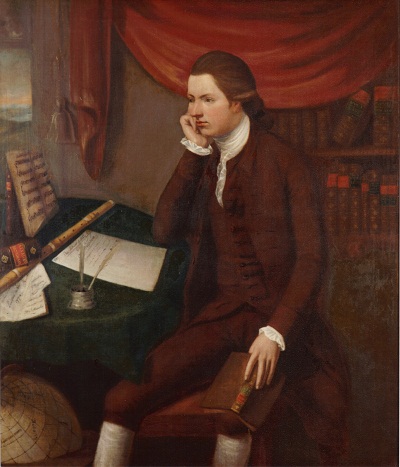
Portrait of John Barton the Elder. See here for more information on the picture.
John Barton (commonly dubbed 'the Elder' to distinguish him from several related John Bartons) was born in Ivegill, Cumbria, the eldest son of Bernard Barton of Carlisle (1728-1773) who moved to the nearby city of Carlisle and established a bleaching business there. Bernard died when John was only 19 or 20 years old, and John took over the family business even though he found much more pleasure in academic interests such as mathematics, theology, philosophy and politics. In his early 20s, John started to write semi-regular opinion pieces which were published in local newspaper 'The Cumberland Pacquet' under the pen-name 'Hiero'. He fell in love with a Quaker girl called Maria Done (1752-1784), but her family did not approve of him. He attempted to win them over, becoming a Quaker in the process.
His business work involved a lot of travel, especially to Liverpool where he formed a lasting friendship with the lawyer and poet William Roscoe, who had previously attempted to woo Maria, without success, but remained good friends with her. John continued to correspond with Roscoe all his life, and many of his letters still survive.
In the 1780s, John set up a second branch of his business in London on Milk Street, and in 1783 relocated there with his wife and three children. Always somewhat frail, Maria died in 1784, and John's year-old son (also John) died soon after. John took solace in his faith, and in 1787 found a second wife, also a Quaker, in Elizabeth Horne (1760-1833). By this time, John had helped - with eight other Quakers and three Anglicans, to found the 'Society for Effecting the Abolition of the Slave Trade' (and he appears in its minutes). On their behalf he procured the support of his friend William Roscoe and of other prominent individuals such as Rev. William Paley (who he knew from Cumbria) and Rev. Dr. Joseph Priestley, and their work with M.P. William Wilberforce helped eventually to abolish the slave trade.
John died in 1789, aged only 34, while his second wife Elizabeth Horne (1760-1833) was pregnant with his fifth child. She named the boy John, and raised him and his step-siblings Mary, Elizabeth and Bernard, on her own.
Some information about John's early life and move to London can be found in *Humphries 1984. His life is also summarized in *Griffiths 2001-2. His name and activities can be found in the the Fair Minute Book of the London Committee for the Abolition of the Slave Trade 1787-1878.
School
John was schooled by a Mr. Lowthion in Newcastle, and his father received a glowing 'school report' from his Master.
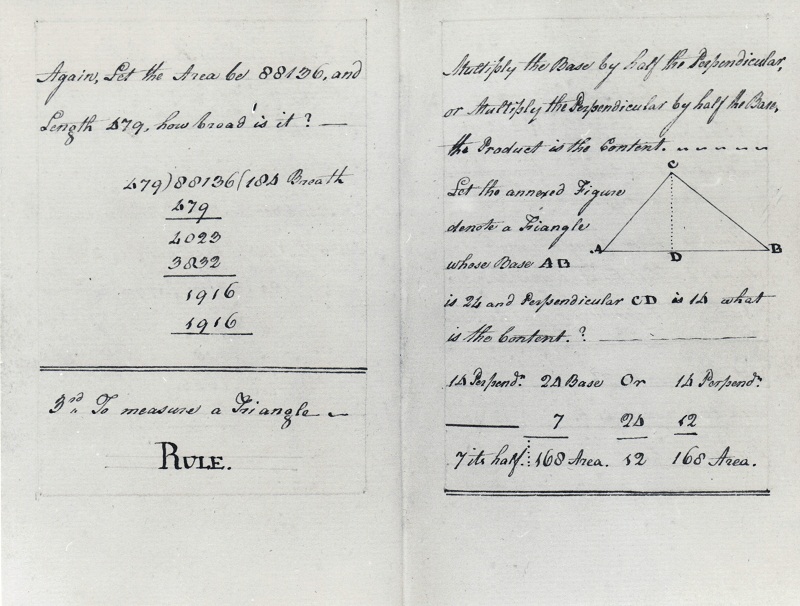
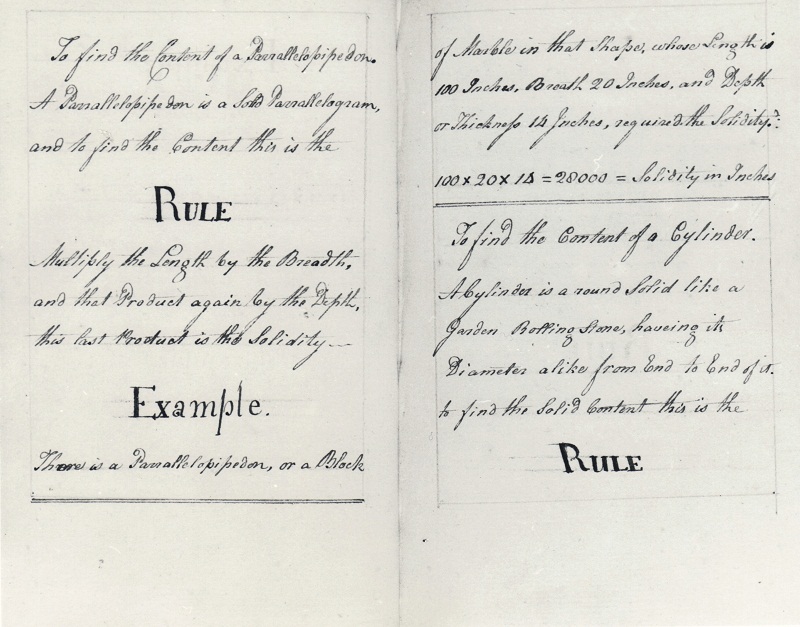
A Treatise on Mensuration
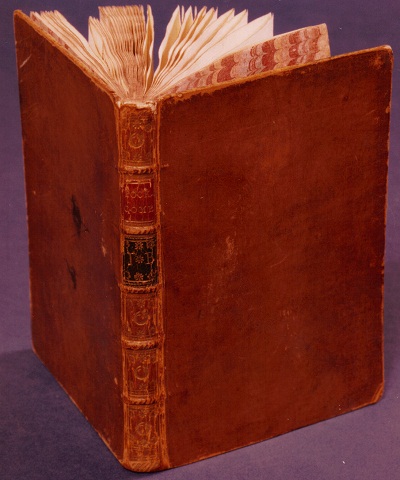
This book 'A Treatise on Mensuration' (meaning the art of measurement) was handwritten by John, but does not appear to have been formally published. It demonstrates his love of mathematics.
Writing
John wrote many letters, especially to his friend William Roscoe, whose celebrity has ensured that much of this correspondence survives. Other letters exist relating to John's anti-slavery work and his promotion of his father's spinning wheel. As many of these as possible are reproduced here.
Selling of Carlisle House, 1782-3
The following advertisement (a photocopy of which was found in the *ABH research notes) shows John selling his house prior to his move to London.
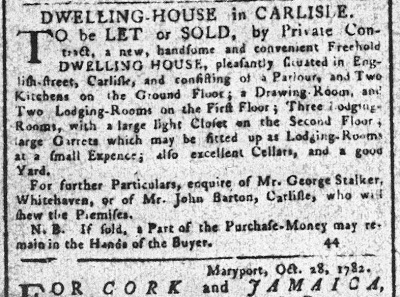
"DWELLING-HOUSE in CARLISLE.
TO be LET or SOLD, by Private Contract, a new, handsome and convenient Freehold DWELLING HOUSE, pleasantly situated in English Street, Carlisle, and consisting of a Parlour, and Two Kitchens on the Ground Floor; a Drawing Room, and two Lodging-Rooms on the First Floor; Three Lodging-Rooms, with a lagre light Closet on the Second Floor, large Garrets which may be fitted up as Lodging-Rooms at a small Expence; also excellent Cellars, and a good Yard.
For further Particulars, enquire of Mr. George Stalker, Whitehaven, or of Mr. John Barton, Carlisle, who will shew the Premises.
N.B. If sold, a Part of the Purchase-Money may remain in the Hands of the Buyer."
Second Marriage
The following document is Public Record Office reference RG 6/965. This notice shares a page with a 1788 marriage notice for Samuel Hoare of Stoke Newington, who was one of the other members of the Society for Effecting the Abolition of the Slave Trade:
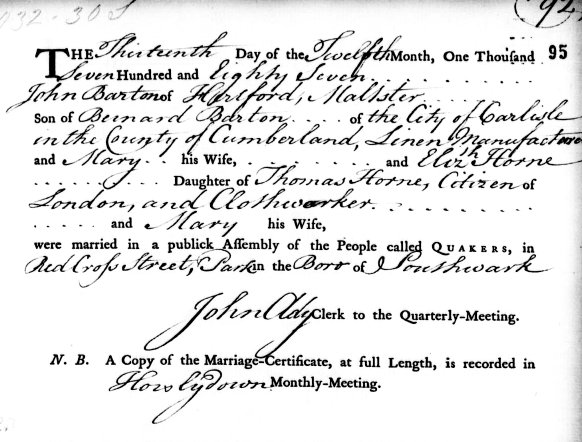
"The Thirteenth Day of the Twelfth Month, One Thousand Seven Hundred and Eighty Seven..... John Barton of Hertford, Maltster..... Son of Bernard Barton.... of the City of Carlisle in the County of Cumberland, Linen Manufacturer and Mary.. his Wife..... and Eliz.th Horne ..... Daughter of Thomas Horne, Citizen of London, and Clothworker..... and Mary his Wife, were married in a publick Assembly of the People called QUAKERS, in Red Cross Street, Park in the Boro of Southwark.
John Ady, Clerk to the Quarterly-Meeting
N.B. A Copy of the Marriage-Certificate, at full Length, is recorded in Horslydown Monthly-Meeting."
View Larger Map
Children
With Maria Done (1752-1784):
- Mary Barton a.k.a. Maria Hack (1777-1844).
- Elizabeth Barton (1779-1838).
- John Barton (1782-1784).
- Bernard Barton the Quaker poet (1784-1849).
With Elizabeth Horne (1760-1833):